Section 5.2 Alternate Pin Functions
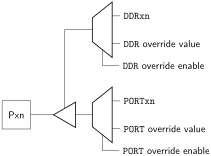
All of the I/O pins on the ATmega328P microcontroller serve alternative purposes. This increases the functionality of the microcontroller without requiring extra space for extra pins. Some of these alternative functions include acting as sources for external interrupts, providing functionality for serial communication, converting analog to digital signals, etc. Each pin has extra hardware that allows for this extra functionality. Multiplexers route control signals to either have the pins act as regular I/O pins, or to function with their alternate purpose. The I/O pin multiplexers are shown schematically in Figure 5.2.1.